
Our web site is still under construction. Keep checking back for improved maps, complete walking tour directions and updated information!
Distance:
Time:
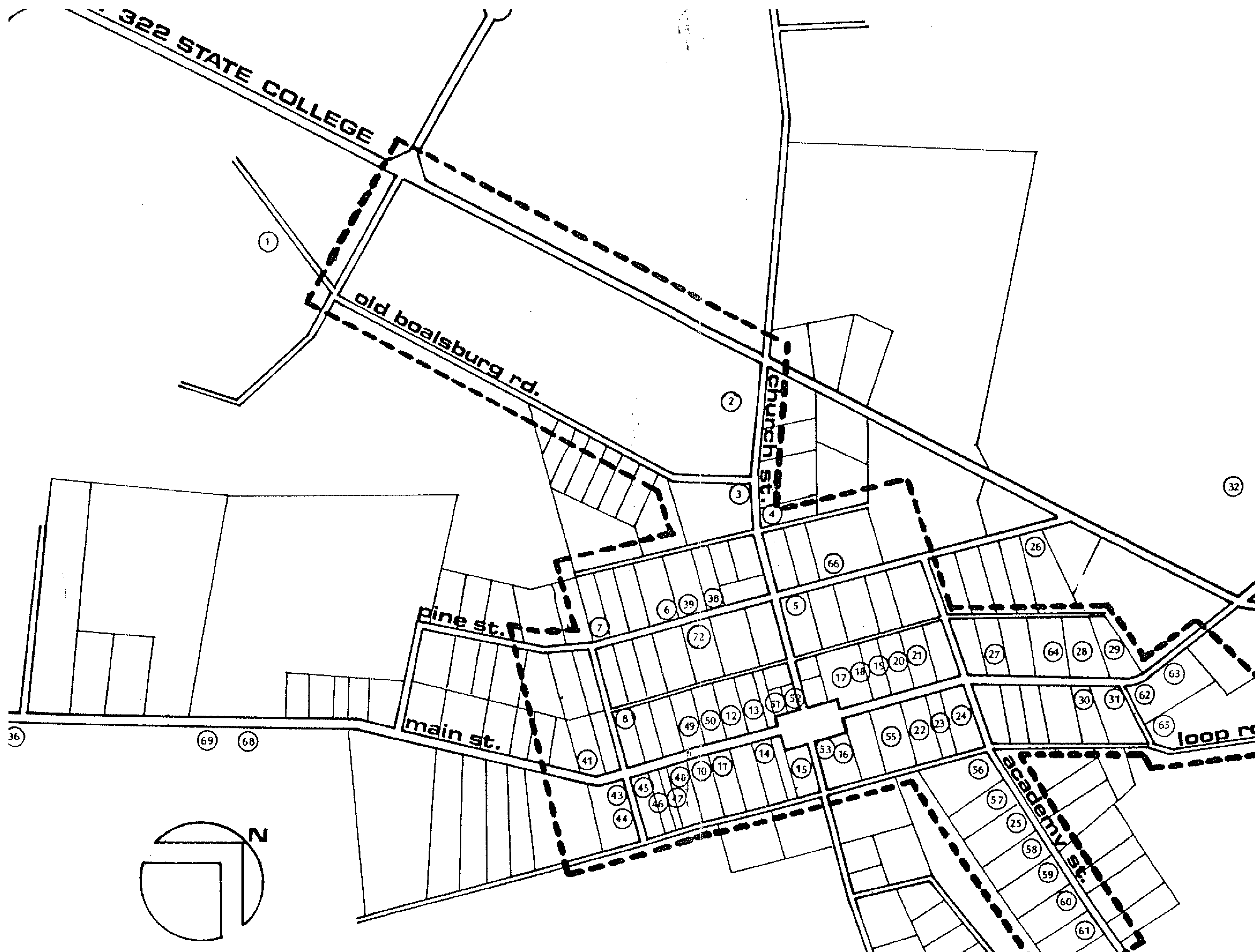
HM#3 St. John’s United Church of Christ
218 North Church Street

On August 11, 1861 the cornerstone of this building was laid. On May 18, 1862 St. John’s German Reform Church was dedicated. According to Shawda’s ‘The Witnesses,’ enclosed in the cornerstone were “one pocket Bible, the Heidelberg Catechism with the constitution in both English and German languages, the English and German Hymn Books, bread and wine, church papers, the German Reformed Messenger, The Western Missionary, the Pastor’s Helper, Die Reformierte Kirchenszeitung der Lammendhirte, and this instrument of writing.”
The plot of land for the church was purchased from George Sheneberger. The cost of construction was $6,700. However, this cost does not reflect the hours of labor and service donated by the members of the congregation. On the morning of the dedication, the church was $1,300 in debt but the large attendance that day brought in $1,461 and the church was dedicated free of debt.
In 1868 the original old reed organ was replaced by the first pipe organ in Centre County. The cost was approximately $2,200 and the organ was built by Charles F. Durner of Quakerstown PA. Joseph Meyer was the organist for St. John’s and it was due to his efforts that the organ was purchased. However, while playing the organ at the Saturday night service the evening before it was to be dedicated, he suffered a fatal heart attack. The pipe organ was dedicated on October 11, 1868. When the dedication sermons for the organ were preached, they were done in both English and German.
In July 1873 a storm hit Boalsburg. The pulpit, alter, and the entire west end of the church were destroyed. The congregation was able to raise the $1,500 needed for repairs and services were held in the sanctuary on Christmas Day. Shortly after the turn of the 19th century the congregation decided to remodel and enlarge the church. This remodeling gave the building the exterior front appearance it has now. The present arrangement of the Sanctuary was also made at this time. The re-dedication service as held on November 2, 1902.
“The Witnesses: The History of the German Reformed Churches in Central Pennsylvania”
HM#2 Zion Lutheran Church
105 Old Boalsburg Road
The Lutheran congregation of Boalsburg was formed in 1825 when they united with the German Reformed congregation and built a stone church. The Reformed congregation and the Zion Lutheran congregation laid the stone work to the Union Church in Boalsburg on June 6, 1825 and it was dedicated on August 4, 1827. The first pastor was Rev. J. T. Abele
The Lutherans alternated Sunday services with the German Reformed in the building that became known as the “Stone Church”. The two congregations shared in the ministry and support of the Stone Church until 1860 when the Lutherans purchased the interest of the Reformed congregation. The Reformed congregation began construction on their own church located next door. In 1868, by decision of the congregation, the Stone Church was torn down and the present brick structure was built. The original stone foundation is visible in places and the bell in the bell tower is the bell from the original stone building.

Boalsburg Cemetery
The Boalsburg Cemetery has been closely linked to the history of the two adjoining churches, although no formal connection has been found. The cemetery’s articles of incorporation were recorded May 21, 1863. The Cemetery remains Boalsburgs only burial ground with records of seven Revolutionary War soldiers have been buried there. In 1864 the development of Memorial Day originated with Emma Hunter, Sophie Keller, and Mrs. Elizabeth Myers placed flowers on graves of soldiers buried here.
for more information: https://www.findagrave.com/cemetery/276633/boalsburg-cemetery
HM#1 Boal Estate

The Boal Estate was constructed in 1789 when Captain David Boal received a land grant for American Revolutionary War service. Under his community leadership, the town opened its first tavern and post office. Springfield was renamed Boalsburg in his honor in 1820. The estate was expanded by his grandson Terry Boal, building a small stone chapel and Boal Barn Playhouse, the summer headquarters of the State College Community Theatre.
For more information: https://www.boalmuseum.com/
 Boalsburg Village Conservancy – 2026
 Historic Boalsburg